
AC Installation
and Replacement
in Burbank, CA
Green Planet Heating and Air provides residential AC installation and replacement services in Burbank, CA. Every system we install is matched to the home’s actual cooling demand, the existing duct condition, and the electrical capacity available at the panel.
Burbank’s location inside the San Fernando Valley shapes the cooling load more than most homeowners realize. Average August highs reach 88°F, several degrees warmer than in coastal Los Angeles neighborhoods at the same latitude. Cooling demand here runs longer and harder than equivalent floor area along the coast. Correct system sizing matters a lot.
As a Burbank local HVAC company, we help you understand what your home needs before any equipment is ordered, and we walk through the tradeoffs in plain language. Burbank Water and Power serves the city as its municipal utility, which can factor into the financial picture when a heat pump retrofit is part of the conversation. Ask our technicians about available rebates.
Call (818) 647-9321 to consult our technicians. We’re ready to help!
Our licensed team covers ZIP codes 91501, 91502, 91504, 91505, and 91506.
Enjoy the Benefits of Choosing Green Planet Heating and Air
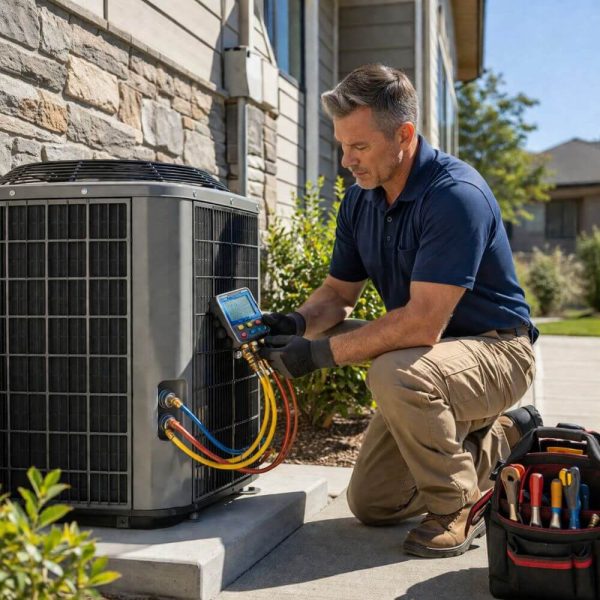
- Advanced technology, eco-friendly systems: We install energy-efficient AC units, heat pumps, and ductless mini-splits that reduce energy consumption and environmental impact.
- Tailored to your home: We assess the specific space, layout, and cooling needs before recommending equipment. Every install matches the home in front of us.
- Rebate tracking on qualifying installs: We actively track rebates and incentives that may apply to your Burbank project.
- Ongoing support after the install: Selection, installation, and long-term support all live with the same team. Maintenance and repairs stay with the equipment across its service life.
- Licensed HVAC installer: License #894993
- Over 300 five-star reviews: Homeowners across Southern California have rated our installations, replacements, and service calls on multiple platforms.
- Clear pricing before installation begins: You’ll receive clear, upfront pricing on all repairs, with no hidden fees or surprises.
Sizing the Right System for a San Fernando Valley Home
San Fernando Valley homes face a cooling challenge that coastal homes do not. The mountain ranges that frame the basin trap warm air during summer afternoons. Heat that would dissipate toward the ocean instead sits over the valley floor through evening hours. Burbank’s August daytime heat index averages near 88°F, with relative humidity around 51%.
This climate behavior produces specific installation consequences:
- Cooling cycles run longer than equivalent coastal homes. A system sized for floor area alone will underperform here. Manual J load calculation factors in the valley enclosure effect through window orientation, insulation level, and ceiling height inputs.
- Oversized systems are not the safe choice. A unit too large short-cycles before it removes humidity, leaving rooms feeling sticky even when the thermostat reads correctly.
- Undersized systems run continuously and still struggle. During August heat events, a unit too small for the load never reaches the set point through the peak afternoon hours.
- Room-by-room load varies significantly. Burbank lots often have south and west exposures that absorb late-afternoon sun loads far greater than those of north-facing rooms. Single-zone systems can leave rear bedrooms uncomfortable even when the main living area cools well.
Every install starts with measurement, not assumption. The site visit captures the inputs that determine which system actually performs once installed.
Call (818) 647-9321 to consult our technicians. We’re ready to help!
AC Installation and Replacement Options for Burbank Homes
We install central AC, ductless mini-splits, heat pumps, and complete system replacements.
Central AC Installation
Central split systems remain the most common choice for Burbank homes with existing ductwork. A new central AC delivers whole-home cooling when sized correctly and supported by properly functioning ducts. The duct evaluation is part of the install scope, not an afterthought.
A new central installation typically involves:
- Removing the existing outdoor condenser and indoor air handler
- Pressure-testing existing ductwork and confirming airflow distribution
- Setting the new outdoor unit on a level pad with manufacturer-specified clearance
- Connecting refrigerant lines, electrical supply, and the condensate drain
- Calibrating the thermostat and verifying performance at every supply register
For homes where the system itself is the limiting factor, we scope air duct replacement into the project from the start rather than discovering it mid-install.
Ductless Mini-Split Installation
Ductless mini-split installation works well for Burbank room additions, converted garages, detached studios, and homes without existing ductwork. Each indoor unit controls its own zone. Refrigerant lines route through a single small wall opening rather than through finished interior walls.
A mini-split installation involves:
- Selecting indoor unit placement for airflow and visual integration
- Running refrigerant lines and electrical connections through a small wall opening
- Mounting the outdoor compressor with adequate clearance from walls and landscaping
- Testing each zone independently for temperature accuracy and airflow balance
Heat Pump Installation and Replacement
A heat pump combines heating and cooling into one electric system. For Burbank homeowners replacing a gas furnace and AC, heat pump installation delivers efficient heating and cooling year-round. The Mediterranean climate keeps winter loads mild enough that heat pumps perform efficiently year-round.
Burbank Water and Power runs residential rebate programs that may apply to qualifying heat pump installations. Program tiers and amounts change without notice. We confirm current eligibility during the site visit and walk through what applies to your specific project. Our commitment to saving energy and reducing environmental impact is at the core of everything we do. We offer various energy-efficient HVAC options.
AC Replacement for Aging Systems
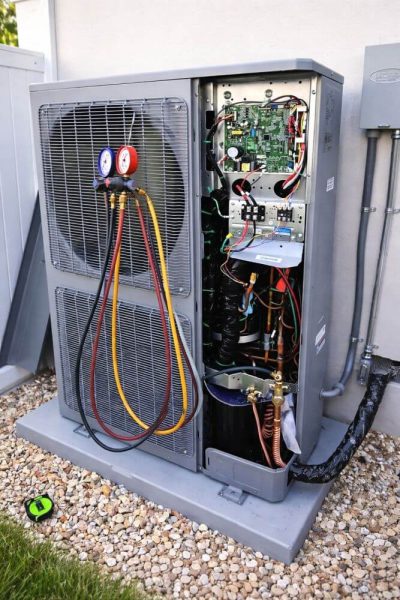
Replacement makes more sense than repair when a system has run past its reliable service life. The right indicators include frequent breakdowns, rising utility bills without a change in usage, refrigerant loss in older equipment, and any system older than 12 to 15 years.
We assess the full system before recommending replacement and explain why a new unit makes sense for your specific situation. For Magnolia Park homes with original mid-20th-century mechanical systems, the replacement conversation often includes a duct condition assessment in the same visit. Once a new system is in place, scheduled AC maintenance keeps it running efficiently through the long cooling season.
How Burbank's Neighborhoods Shape the Install
Glendale sits at roughly 650 feet of elevation in a topographically enclosed basin between the Santa Monica Mountains to the south and the Verdugo range to the north. Various zones across the city carry different install considerations. Our team accounts for them during every site visit.
- Magnolia Park. The corridor along Magnolia Boulevard holds the largest concentration of Burbank’s 1920s-through-1940s bungalows. Original ductwork in these homes was sized for smaller-capacity equipment and earlier refrigerants. Replacing the AC without addressing duct condition leaves a new system fighting old infrastructure. The site walkthrough always includes duct inspection here.
- Rancho District. Equestrian zoning produces large lots with longer setbacks between buildings and property lines. Outdoor condenser placement is unusually flexible across this part of the city. Multi-zone systems often work well because conditioned floor area tends to be larger. We discuss zoning options early during the assessment.
- Burbank Hills and Stough Canyon edge. Hillside and foothill-adjacent properties face conditions that flat-lot homes do not. Solar gain on south-facing walls runs hotter at higher elevations along the slope. Outdoor units accumulate organic debris from foothill wind events more rapidly than valley-floor homes. Condenser clearance and seasonal cleaning expectations both factor into the install scope.
Hollywood Burbank Airport and Acoustic Considerations
Burbank’s proximity to the airport creates an installation context worth understanding. Homes near approach paths in northeast Burbank already have sound-rated windows and exterior treatments installed under the airport’s residential sound insulation program. Outdoor condenser noise is less of a constraint here than in quieter residential cities. For homeowners considering quieter variable-speed equipment as a premium upgrade, the acoustic benefit may matter less than other performance gains. We discuss this tradeoff during the assessment for homes near the flight path.
AC Installation and Replacement Costs in Burbank
Central AC replacement in Burbank generally ranges from $4,000 to $8,000 for a standard single-family home before incentives. Heat pump installations typically run between $6,000 and $13,000 before BWP and federal program credits. Ductless mini-split systems start around $3,000 for a single zone and increase with each additional zone added to the project.
Several factors move the final cost:
- System type. Heat pumps, central AC, and ductless mini-splits differ in equipment cost and installation complexity.
- System size. A correctly sized larger unit costs more than a smaller one. After your service, we offer tips and recommendations to prevent future issues. Manual J calculation determines the right size for your home, not floor-area shortcuts.
- Duct condition. Repair or replacement of existing ducts adds to the project when needed, particularly in Magnolia Park homes with original infrastructure.
- Electrical capacity. Heat pump retrofits sometimes require panel work to handle the additional load.
- Permit and ECC fees. The City of Burbank sets mechanical permit fees. ECC verification fees vary by project scope.
Benefits Burbank Homeowners See After a Replacement
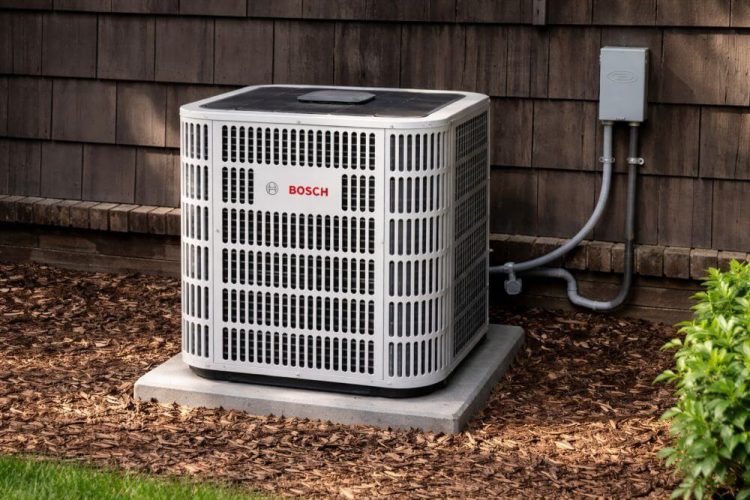
Replacing an aging system delivers practical improvements beyond just cooler air. Burbank homeowners typically notice:
- More consistent room-to-room temperatures, since correctly sized systems run in longer cycles
- Lower monthly energy use through Mediterranean climate summer months
- Quieter operation, particularly meaningful in dense residential blocks where neighboring lots sit close
- Better humidity removal during longer steady cycles, leaving rooms more comfortable at the same thermostat setting
- Reduced repair frequency since new equipment is not drawing on worn components
- Stronger performance during peak August heat events, when older equipment most often fails
Signs Your Burbank AC Needs Replacing Instead of Repair
Not every aging system needs replacement. The conditions below indicate that a new unit makes more financial sense than another repair cycle.
- The system uses R-22 refrigerant, which is no longer produced for recharge
- The unit has failed more than once in the past two years
- The system cannot reach the set temperature during August heat events
- A single repair quote approaches half the cost of a comparable replacement
- The home has added square footage since the original equipment was installed
If your system is relatively young and the fault is isolated to a single component, scheduled AC repair service is usually the right move.
When a system fails mid-summer before a planned replacement, an emergency AC repair stabilizes the situation while you plan the longer-term project.
Request a Burbank AC Replacement Estimate and System Walkthrough
Every AC project should begin with measurement, not a phone quote. The site walkthrough captures the inputs that determine which equipment actually fits your home: cooling load, duct condition, electrical capacity, and the practical realities of where the outdoor unit can sit. We bring those findings back to you in plain language and walk through the options before you commit to any equipment.
The first visit covers a Manual J load calculation, a duct inspection, an electrical panel review, and a discussion of which BWP incentives may apply to your project. You receive a written estimate that itemizes equipment, labor, permit fees, and ECC verification. No phone quotes, no pressure tactics, no surprise charges once the work begins. Installation is one part of our residential AC services alongside repair, maintenance, and emergency response across the cooling season.
Call (818) 647-9321 to consult our technicians. We’re ready to help!

Reviews

Reviews

Reviews

Reviews
2219 W Olive Ave #227, Burbank, CA 91506
Opening hours:
Mondays to Fridays, and Sundays: Open 24 hours
Saturdays: Closed
Connect with us on social:
Frequently Asked Questions
What size AC unit does my Burbank home actually need?
The right size depends on your cooling load, not just square footage. Window orientation, insulation level, ceiling height, and the position of sun-facing rooms all factor in. An oversized unit short-cycles and leaves the air feeling sticky. An undersized unit runs constantly without reaching the set point.
How long does a full AC system last in a home like mine?
Most residential AC systems last 12 to 15 years with proper care. Systems in Burbank often work harder due to the long cooling season in the valley. Regular maintenance, clean filters, and adequate condenser clearance all extend service life. Neglect shortens it noticeably.
Should I replace both the indoor and outdoor units at the same time?
Yes, in most cases. Matched components are engineered to work as a system, and mixing new and old parts reduces efficiency. A new outdoor condenser paired with an old indoor coil often loses the efficiency you paid for. The site walkthrough confirms which components need to be replaced together.
Do I need to upgrade my ductwork when I replace the AC?
Not always. Ductwork condition depends on age, sealing, and the quality of the original design. Older Burbank homes built in the 1920s to 1940s often need ductwork attention because the ducts were sized for smaller systems. The site visit includes a duct inspection before any recommendations are made.
Will a new AC actually lower my energy bill?
Yes, when the new system is sized correctly and installed to match your home’s ductwork and electrical setup. Modern equipment cools more efficiently than systems from a decade ago. Utility bill improvements also depend on filter care, thermostat settings, and condenser cleanliness. A poorly maintained new system will not deliver its full efficiency.
How do I know if my current AC uses R-22 refrigerant?
Check the label on the outdoor condenser. It lists the refrigerant type near the model and serial numbers. R-22 production ended in the United States, so systems using it cannot be recharged with new refrigerant. A leak in an R-22 system usually means replacement is the practical option.
Driving Directions: